
Easy
timer10 min
Personal Finance Basics Quiz
Money basics: saving, investing, budgeting and credit, for everyone.
help10 questions
gradingAuto scored

Personal finance is just the way you handle your own money. It covers how you earn, spend, save, invest, borrow, and protect what you have. You do not need to be a maths expert or a rich person to learn it. A few simple habits, like making
Pick a set, beat the timer and get scored at once. Then open your answer sheet and check the leaderboard. Every quiz here is a real set you can take.

Money basics: saving, investing, budgeting and credit, for everyone.
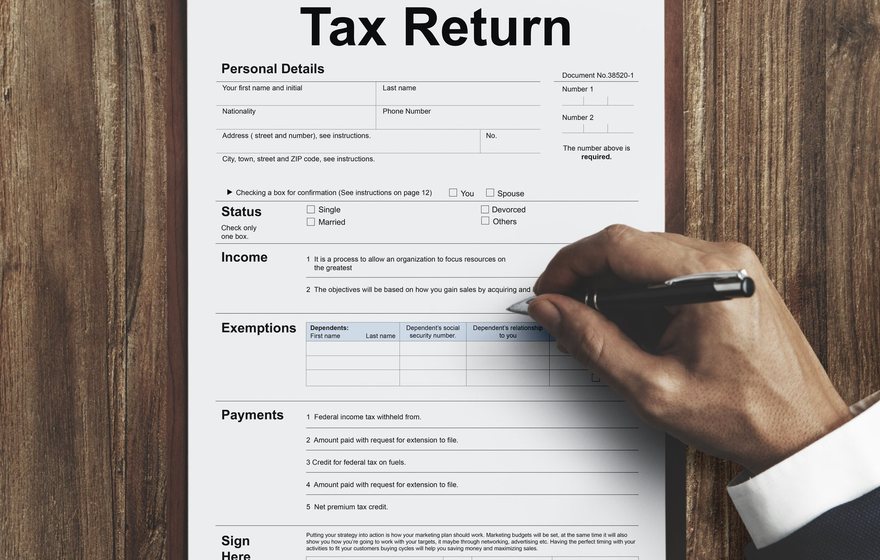
Income tax basics for India, general knowledge level, not advice.

India's banking regulators, digital payments (UPI/PAN/GST), the Union Budget and core economy terms. 10 questions, about 2 minutes. Great for SSC, Banking and IBPS GK practice.

India's top competitive exams, UPSC, SSC, NEET, JEE, CAT, Banking and Defence: who conducts them, what they unlock, that every aspirant should know.
Read this in plain English, then take the quizzes above. Free to read, no login needed.
Personal finance is just the way you handle your own money. It covers how you earn, spend, save, invest, borrow, and protect what you have. You do not need to be a maths expert or a rich person to learn it. A few simple habits, like making a budget, keeping an emergency fund, and starting to invest early, can make a big difference over time. This page gives you the basics in plain English, made for Indian users.
Think of this as general education, not advice for your exact situation. Numbers like interest rates and rules can change, and the right choice depends on your own income, goals, and risk comfort. For anything big, like a large loan or a long term investment, it is smart to read the official source or talk to a qualified person. Use this quiz to build your money awareness, test what you know, and spot the gaps you want to fill.
A budget is just a simple plan for your money. It tells you how much comes in and where it goes. Without a budget, money often leaks away in small bits and you wonder where it went. One easy method many people start with is the 50-30-20 idea.
The 50-30-20 rule splits your take home pay (the money in hand after tax, not your full CTC) into three parts. About 50% goes to needs like rent, food, bills, travel, and loan EMIs. About 30% goes to wants like eating out, movies, and shopping. About 20% goes to savings, investing, or paying off debt faster.
This is a guide, not a hard rule. In big metro cities like Mumbai, Bengaluru, or Delhi, rent alone can push needs above 50%, so people adjust the numbers. In smaller towns, needs may take less and you can save more. The point is to give every rupee a job.
An emergency fund is money you set aside only for sudden problems, like a job loss, a medical bill, or an urgent home or vehicle repair. It keeps you from running to a loan or a credit card when life surprises you.
A common guide in India is to save about 3 to 6 months of your essential expenses. People with a stable salaried job often aim near the lower end. People with children, dependent parents, or unstable income (like freelancers and business owners) usually aim higher, sometimes 9 to 12 months.
This money should be safe and easy to reach, so it is usually kept in a savings account, a fixed deposit, or a liquid fund, not in risky investments. The idea is simple. Build it first, keep it separate, and refill it after you use it.
A savings account is the basic place to keep money you may need soon. It earns a small interest and lets you withdraw any time. A current account is mainly for businesses and does not usually pay interest. Knowing the difference helps you pick the right one.
A fixed deposit (FD) is when you lock a sum with a bank for a set period and earn a fixed interest rate that is usually higher than a savings account. The trade off is that taking it out early can mean a penalty or lower interest.
For safety, bank deposits in India are insured by the DICGC, which is owned by the Reserve Bank of India. The cover is up to 5 lakh rupees per depositor per bank, including both principal and interest, across all your accounts in that bank. Deposits with NBFCs are not covered by this scheme.
Saving keeps money safe, but investing helps it grow faster than inflation over the long run. A mutual fund pools money from many people and a professional manager invests it across shares, bonds, or both. Mutual funds in India are regulated by SEBI. They carry market risk, so values can go up and down.
A Systematic Investment Plan (SIP) is a way to invest a fixed amount in a mutual fund at regular gaps, often monthly, sometimes starting as low as 500 rupees. SIP builds discipline and uses rupee cost averaging, which means you buy more units when prices are low and fewer when prices are high, smoothing your average cost.
For safer, long term goals there are government backed options. The Public Provident Fund (PPF) is a 15 year scheme that earned 7.1% per year in early 2026, with interest set each quarter. The Employees Provident Fund (EPF) is a retirement scheme for salaried staff where the employee puts in 12% of basic pay plus DA, the employer matches it, and the rate was 8.25% for 2025-26. Both also offer tax benefits under Section 80C.
When you borrow, lenders want to know if you repay on time. In India the most known measure is the CIBIL score, given by TransUnion CIBIL. It ranges from 300 to 900. A higher score means you look like a safer borrower.
As a rough guide, a score around 650 to 749 is seen as good, 750 and above is very good to excellent, and below 650 is weak. A strong score can mean faster loan approval, a higher loan amount, and a lower interest rate, which saves you money.
You build a good score by paying EMIs and credit card bills on time, not using too much of your credit limit, and not taking on more debt than you can handle. With loans, always check the interest rate, the total cost, and the EMI before you sign, and read whether the rate is fixed or floating.
Insurance protects your money from big shocks. Term insurance is a pure life cover. You pay a premium, and if the policyholder dies during the term, the family gets a payout. It has no maturity money if you survive, which is why it is usually cheap for a large cover. Health insurance covers hospital and medical bills, so a serious illness does not wipe out your savings. Insurance in India is regulated by the IRDAI, and many people keep both because they do different jobs.
Compounding is one of the most powerful ideas in money. It means you earn returns not just on your original amount, but also on the returns you already earned. Over the years this snowballs, and the growth speeds up.
Time is the real fuel for compounding. Starting small but early often beats starting big but late, because your money has more years to grow on itself. This is the simple reason so many guides say to begin saving and investing as soon as you can.
Money skills help you every single day, from planning a monthly budget to choosing a loan or buying insurance without getting cheated. Beyond daily life, these basics show up in the financial awareness and general awareness sections of many Indian exams, such as banking exams (IBPS, SBI, RBI), some government recruitment tests, and school or college level financial literacy programmes. Terms like SIP, mutual fund, PPF, EPF, CIBIL score, DICGC cover, and the 50-30-20 rule are exactly the kind of facts these sections test. Practising them as quiz questions makes the ideas stick, builds quick recall, and helps you spot wrong options fast under time pressure.

Extra practice for your exam, auto scored with a leaderboard.

Quiz on the key central government financial schemes, Jan Dhan, Mudra, PM Kisan, Atal Pension and Stand Up India. Built for bank and SSC exam aspirants.

Quiz on UPI, NEFT, RTGS, IMPS, IFSC, KYC, NPA and CASA. Built for IBPS, SBI and RRB aspirants.
Teach a batch? Make your own quiz on Quizzory in minutes. Add MCQ, short answer or long answer questions, set a timer that auto submits, and share it with one WhatsApp link. MCQs are scored automatically. Every student sees a percent score and an answer sheet, and a leaderboard ranks the batch by score then speed. You sign in with a free SurveyHeart account to create. Students need no login to attempt.
addCreate a QuizYes. The quiz is free to attempt. You can start answering the questions without paying anything.
No login is needed to attempt the quiz, so you can jump in right away. You only need a free SurveyHeart account if you want to create your own quiz.
The questions are multiple choice (MCQs) and are scored automatically. You see your result without anyone marking it by hand.
No. There is no negative marking, so a wrong answer does not cut your score. You can attempt every question without that fear.
The leaderboard is not live. It updates when you refresh the page, so refresh to see the latest standings.
Yes. You can share it with one tap on WhatsApp, so it is easy to challenge friends and family and compare scores.